Gnudi
Spinach & Ricotta
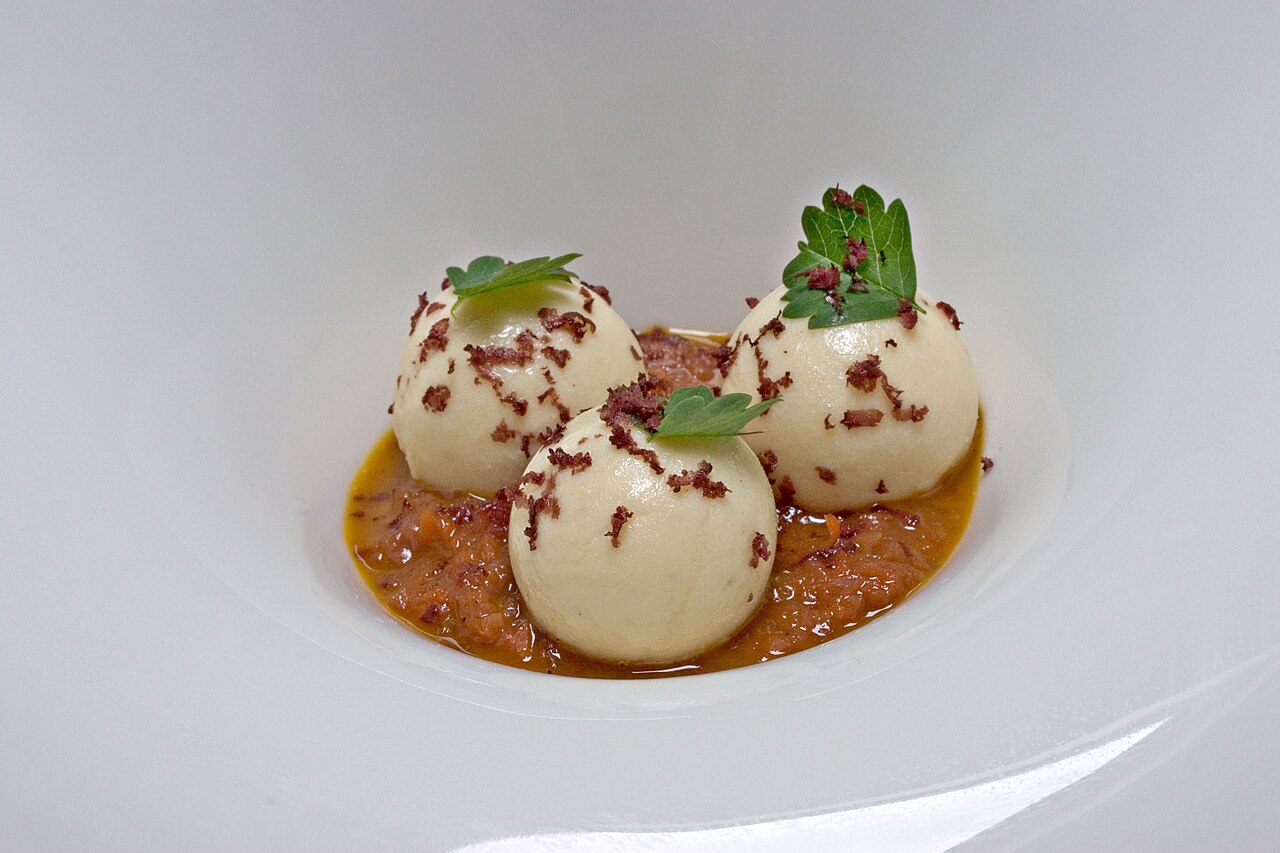
The easier cousin of gnocchi — no potato boiling, no ricing. Just squeezed-dry spinach folded into ricotta and a small amount of flour, rolled into pillowy dumplings and boiled until they float. High protein, decent fibre, genuinely fast. Freeze raw and cook straight from the freezer.
- 500 g frozen spinach, thawed completely
- 400 g full-fat ricotta
- 2 eggs, beaten
- 60 g Parmesan, finely grated
- 80 g chickpea flour (or 00 flour), plus more for dusting
- ½ tsp fine salt
- ¼ tsp freshly grated nutmeg
- to taste black pepper
- 60 g butter + 8 sage leaves (brown butter option)
- or simple tomato sauce, warmed
- or pesto + a splash of pasta water
- 30 g extra Parmesan to finish
-
01
Squeeze the spinach dry Critical step
Thawed frozen spinach holds a surprising amount of water. Transfer it in handfuls to a clean tea towel or muslin, gather the corners, and twist over a sink, squeezing hard until almost nothing drips out. Repeat for each handful. Then chop finely. Wet spinach will make the dough sticky and the gnudi will fall apart in the water.
-
02
Mix the dough
In a large bowl, combine the squeezed spinach, ricotta, beaten eggs, Parmesan, flour, salt, nutmeg, and pepper. Mix until a uniform soft dough forms — it should hold its shape when rolled but feel slightly tacky. If the mixture is too wet (won't hold a ball), add flour a tablespoon at a time; but add as little as possible or the gnudi will be dense.
-
03
Rest the dough
Cover the bowl and refrigerate for at least 30 minutes (up to overnight). The rest firms the mixture and makes rolling much easier — the gnudi will also hold together better when boiled. Dust a tray generously with semolina or chickpea flour.
-
04
Shape the gnudi
Scoop roughly 30 g portions (about a tablespoon) and roll lightly between floured palms into balls or short cylinders — they don't need to be perfect. Place on the dusted tray as you go. Keep your hands lightly floured. If freezing, stop here: freeze on the tray until solid (about 2 hours), then transfer to a bag.
-
05
Boil
Bring a large pot of well-salted water to a gentle boil — a rapid boil can break delicate gnudi. Lower them in batches (don't crowd). They are ready about 1 minute after they float to the surface, typically 3–4 minutes total. From frozen: 5–6 minutes. Remove with a slotted spoon and set on a warm plate.
-
06
Sauce & serve
Brown butter: melt butter in a wide pan over medium until golden and nutty-smelling, add sage leaves and let them crisp for 30 seconds, then add the gnudi and toss gently for 1 minute. Finish with Parmesan. Tomato sauce or pesto: warm the sauce in a wide pan, add drained gnudi and a splash of the cooking water, toss gently. Serve immediately — gnudi firm up as they cool.